
“`html
Enhancing Privacy in Open-Plan Areas
Modern office design often embraces open-plan layouts, praised for encouraging collaboration and communication. However, they also present challenges when it comes to ensuring privacy. Whether it’s the noise, lack of personal space, or distractions, maintaining privacy in these spaces without compromising the benefits of an open atmosphere is key. In this post, we’ll explore seven strategies: acoustic solutions, flexible workstations, private pods and phone booths, zoning, visual privacy solutions, and technology integration. These strategies are designed to help both individuals and companies improve privacy and productivity in open-plan environments.
Acoustic Solutions
Noise is a significant factor in privacy disruption. Acoustic solutions, such as sound-absorbing panels and ceiling tiles, play a crucial role in mitigating noise pollution in open-plan areas. These panels absorb sound waves, reducing echo and creating a quieter environment that facilitates concentration. Implementing strategic acoustic zoning with partitions can create invisible sound barriers between different work areas.
Incorporating white noise machines or employing natural sound masking techniques like indoor water features can also enhance auditory privacy. By carefully designing the acoustics of a space, you can balance the ambiance without resorting to complete isolation. It’s about managing sound to foster both collaboration and privacy, ensuring that employees are neither overwhelmed by noise nor isolated from their team.
Flexible Workstations
The demand for flexible workstations in the modern office is driven by the need for adaptability and privacy. By incorporating adjustable furniture and movable partitions, workplaces can redefine layouts with ease. This flexibility allows employees to modify their environment to fit their personal privacy needs, whether they require isolation for concentration or prefer an open setup for team collaboration.
Design elements like sit-stand desks or mobile work desks encourage not only movement but also personal space customization. The autonomy to rearrange workspaces can significantly increase job satisfaction and productivity, as employees can control their level of interaction with the surrounding environment.
Private Pods and Phone Booths
A growing trend in addressing privacy concerns in open-plan areas is the use of private pods and phone booths. These compact, soundproof enclosures provide a refuge for those needing a quiet space for concentration and confidential conversations. Ideal for short meetings or calls, these booths offer an immediate escape without leaving the office floor.
Installation of these units is relatively easy and does not require structural changes, making them a cost-effective solution. Their modular design means they can be added or removed as privacy needs change, offering a dynamic response to evolving office environments. These pods also contribute positively to workplace ergonomics by offering a diverse range of environments within the same space.
Zoning
Zoning different areas for varied activities is an innovative way to enhance privacy while maintaining an open-plan layout. By creating distinct zones such as collaborative areas, quiet zones, and breakout spaces, organizations can cater to diverse work styles and privacy needs. Clearly defined zones help reduce interruptions and manage noise levels effectively.
Designing the zones with furniture, plants, or semi-transparent partitions can help subtly signify space usage without creating a closed-off feeling. Employees can move between zones as their work demands, finding the ideal environment for their tasks. This strategic zoning can increase productivity by allowing individuals to select spaces that best suit their privacy preferences.
Visual Privacy Solutions
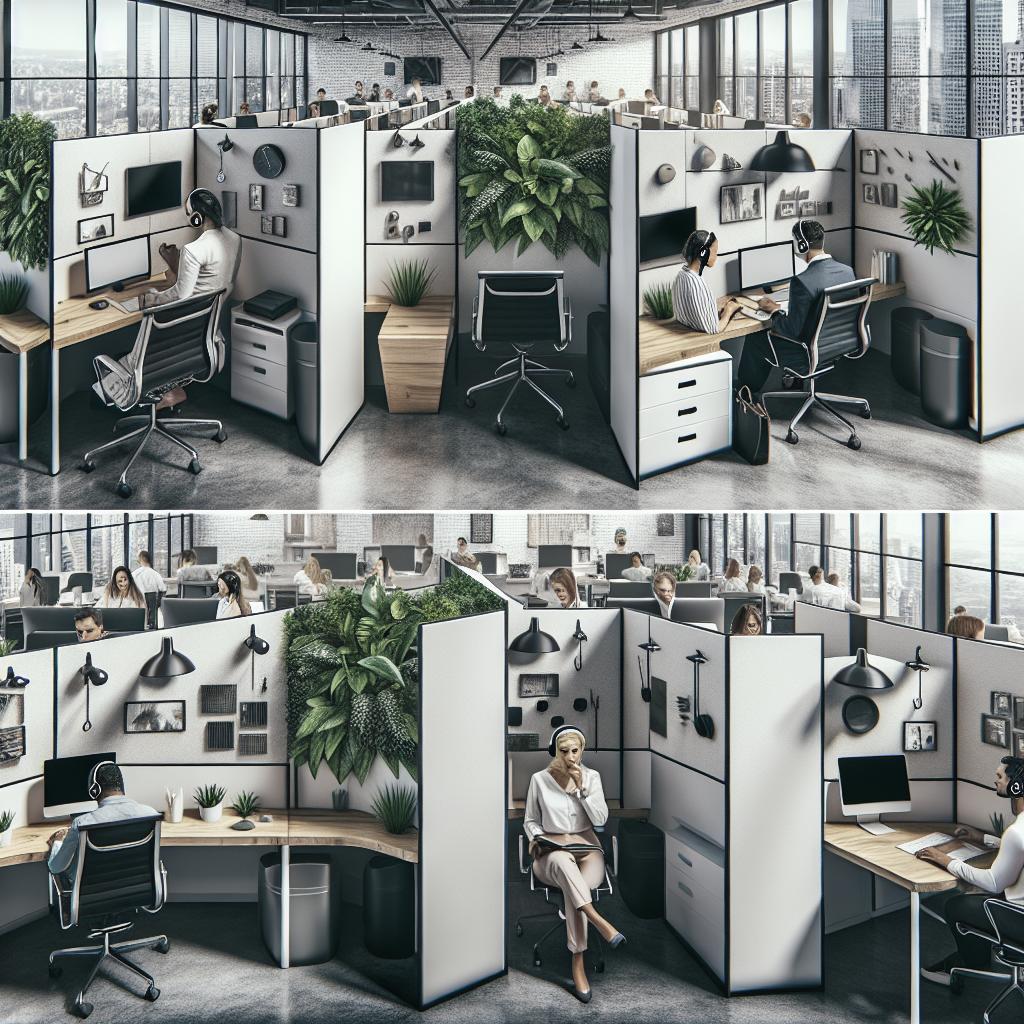
Visual privacy can be improved with the use of clever partitioning and furniture placement. Options include frosted glass screens, elaborate bookcases, or movable walls that can obscure direct sightlines, offering employees visual separation from busy environments. These solutions ensure that distraction is minimized while still maintaining the open-air feel of the space.
Plants serve as another effective tool for visual privacy. Strategically placing tall or bushy plants can create natural dividers that contribute to the aesthetics of a workspace while offering privacy. These biological barriers add another layer of tranquility and can improve indoor air quality, enhancing the overall work environment.
Technology Integration
With advancements in technology, integrating tech solutions like noise-cancelling headphones or privacy software on devices can significantly enhance privacy in open spaces. Such headphones allow for focused work by blocking out background noise, while privacy screen filters on laptops deter “visual hacking” by limiting viewing angles.
Smart office technologies, including IoT sensors, can also be employed to monitor and adjust environmental conditions like lighting and noise levels according to privacy needs. These technologies enable a more personalized workspace that adapts in real-time to the needs of employees, potentially boosting both productivity and satisfaction.
Related Posts
- Combining Design and Comfort in Modern Workspaces
- The Future of Office Spaces: Balancing Work and Well-Being
- Tech-Driven Workspace Innovations to Watch
Next Steps
| Solution Type | Benefits |
|---|---|
| Acoustic Solutions | Reduce noise, improve concentration, balance ambiance |
| Flexible Workstations | Promote adaptability, enhance personal customization, increase job satisfaction |
| Private Pods and Phone Booths | Provide soundproof spaces, offer flexibility for meetings/calls, improve ergonomics |
| Zoning | Create activity-specific areas, manage noise, enhance productivity |
| Visual Privacy Solutions | Minimize distractions, maintain open-air feel, enhance aesthetics |
| Technology Integration | Personalize work environment, boost productivity, deter visual hacking |
“`