
“`html
How to Create a Gallery Wall That Tells a Story
Creating a gallery wall is one of the most expressive yet sophisticated ways to infuse personality into your home decor. Whether you’re showcasing family photos, art prints, or personal mementos, a gallery wall can articulate a story that resonates with all who see it. In this guide, we’ll walk you through ten essential tips on how to design a gallery wall that not only looks aesthetically pleasing but also narrates a cohesive story. From strategic layout planning to creative mix-and-match framing styles, we’re diving into the fine details that can transform a blank wall into a storytelling masterpiece. Follow along to learn how proper planning, color coordination, and personal touches can all contribute to the creation of a stunning and meaningful gallery wall.
FIRST, DON’T GET ALL HOLE-Y – LAY OUT YOUR GALLERY WALL BEFORE YOU HANG IT
Before you start hammering nails into your walls, it’s vital to have a strategy. Laying out your gallery wall on the floor or using paper templates can give you a clear visual of the final look without committing to holes in your wall. Arrange your frames, artworks, and objects on the floor to try different layouts and combinations. This approach allows you to refine your design until you’re satisfied with the overall aesthetic and balance.
Consider the context of your space; the wall’s dimensions, the proximity to furniture, and whether the gallery is a focal point or a subtle enhancement. Experiment with spacing between pieces to achieve rhythm and harmony. Taking this preparatory step saves you from the frustration of uneven spacing and unnecessary patching of wall holes.
CREATE A COHESIVE COLOR PALETTE FOR A PULLED TOGETHER LOOK
A consistent color palette helps unify disparate elements within your gallery wall. Start by choosing a dominant color or a set of complementary hues that align with your room’s decor and mood. Whether you prefer warm earthy tones, cool blues, or vibrant pops of color, consistency is key.
The color scheme can be expressed through the art itself or through the frames and mats you choose. This cohesiveness makes the collection feel intentional and well-curated, guiding the eye through the narrative you’ve crafted. Remember, your gallery wall should enhance your room’s existing color story rather than compete with it.
GO BIG – START WITH SOMETHING LARGE AND IN CHARGE TO ANCHOR THE WHOLE COLLECTION
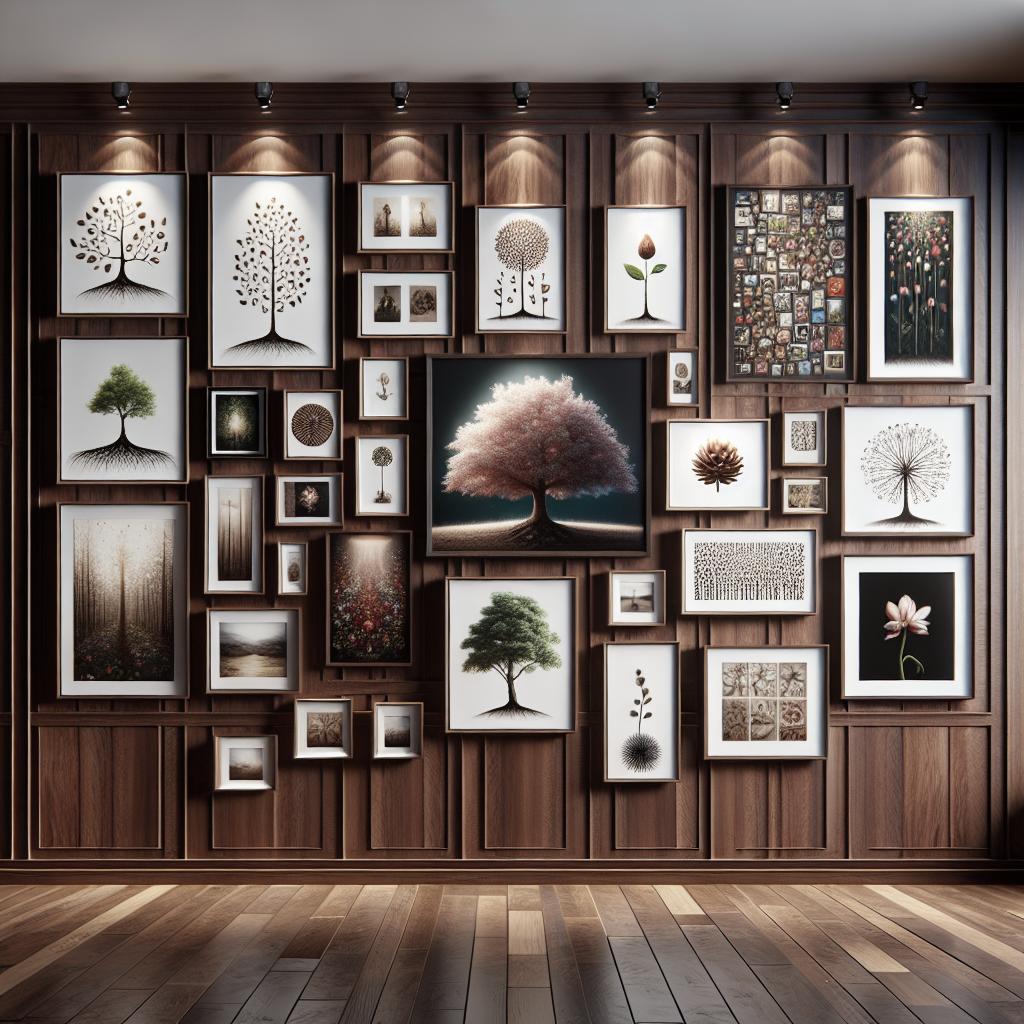
The anchor piece is often the largest or most unique, and serves as the central focal point in your gallery wall. This piece sets the stage for the rest of the display, allowing the eye to naturally flow outwards towards the smaller elements.
Choose an anchor with a powerful visual or emotional impact. This could be a striking painting, a family portrait, or a cherished artifact. The key is for this piece to embody the core essence of the story your wall is telling, ensuring it holds the narrative together effectively.
IF YOUR BIGGEST PIECE IS #1, THEN YOUR NEXT BIGGEST PIECE IS #2
Following the anchoring item, arrange the second-largest piece nearby. This creates a hierarchy of visuals that draw the viewer deeper into your collection. Think of this as the supportive character that further enhances the plot your wall narrates.
It’s crucial that the second-largest piece complements the anchor in style or theme without overshadowing it. Together, they set the foundational theme and visual rhythm that will guide you in placing smaller items.
MIX YOUR HORIZONTALS & VERTICALS (AND GIVE PAIRS A TRY)
Mixing horizontal and vertical elements contributes to a dynamic and visually interesting gallery wall. The interplay between orientations leads to a more engaging composition, preventing viewer fatigue.
Consider pairing certain pieces that naturally align — for instance, a series of travel photographs in both portrait and landscape formats can punctuate your narrative with varied perspectives. This variety invites viewers to ponder each component individually and as part of the whole.
WHILE WE’RE AT IT, DON’T FEEL LIKE YOU HAVE TO STICK TO ONE TYPE OF FRAME – MIX IT UP
Uniformity in framing can come across as rigid and sterile. Introduce diversity by mixing different frame styles, textures, and colors. While diversity in frames adds depth, ensure they still harmonize with the overall theme and palette of your gallery wall.
Combining ornate vintage frames with sleek modern designs can create a captivating contrast, enhancing the eclectic and textured nature of your story. These frame differences can highlight the unique aspects of each piece and serve as a metaphor for converging narratives.
DON’T BE SUCH A SQUARE – NOT EVERYTHING HAS TO BE FRAMED (OR SQUARE)
Ditch the notion that every piece must be traditionally framed. Add visual intrigue with items that break the uniformity, such as tapestries, sculptural objects, or even a floating shelf for three-dimensional items.
The juxtaposition of framed versus unframed items in varying shapes and forms keeps your gallery wall lively and dynamic. These touches serve as visual breaks that can also bolster the storytelling aspect, adding texture to your narrative.
WHEN IN DOUBT, FLOAT MOUNT
Float mounting is an excellent technique for pieces that deserve emphasis, like artworks on textured or handmade paper. This style of presentation creates a shadow effect, imbuing your pieces with a sense of depth and additional intrigue.
Consider float mounting as a way of enhancing minimalist or open-space interiors. The technique invites observers to engage closely with the artwork, elevating it beyond ordinary framed presentations and into a more immersive experience.
ADD SOMETHING PERSONAL – ANYTHING CAN BE ART
Infuse your gallery wall with items of personal significance. From your child’s early paintings, postcards from favorite destinations, to an heirloom pocket watch, personal artifacts bring authenticity and sincerity to your wall’s narrative.
Personal items steer the emotional connection of the viewer, transitioning your gallery wall from a mere visual display to an intimate storytelling piece that embodies your personal journey, values, and memories.
WANT MORE OF WHERE THAT CAME FROM?
Your first gallery wall doesn’t have to be your last. As you gather more meaningful pieces, consider expanding your current layout or starting a new wall in another area of your home. Your collection can evolve just as your personal story does.
Explore rotating pieces to keep your display fresh and compelling. Like chapters in a book, your gallery wall should communicate a story that can grow, transform, and continue to captivate over time.
Summary of Main Points
| Step | Action |
|---|---|
| 1 | Lay out your gallery wall before you hang it to avoid unnecessary holes. |
| 2 | Create a cohesive color palette for unity. |
| 3 | Choose a large, anchoring piece as a focal point. |
| 4 | Place your second largest piece near the anchor. |
| 5 | Mix horizontal and vertical pieces for varied perspectives. |
| 6 | Incorporate diverse frame styles for texture. |
| 7 | Include unframed items to break uniformity. |
| 8 | Use float mount for emphasis. |
| 9 | Add personal items for authenticity. |
| 10 | Continue evolving your gallery wall with new pieces. |
“`