
“`html
How to Use Textiles to Add Warmth
In the realm of interior design, textiles stand as an integral element that not only embellishes a space but also introduces a touch of warmth and comfort. From the tactile appeal of textures to the emotive power of colors, textiles have the unique ability to transform a room into a haven. Through exploring the foundational principles of fabric choice, to mastering the art of layering various textile elements, this guide will help you infuse your living space with warmth. Furthermore, we’ll delve into innovative ways to mix materials and textures, creating visually delightful and immersive environments. With an emphasis on purposeful design, this article aims to equip you with versatile ideas to enhance your decor through the power of textiles, ensuring an inviting ambiance that is both aesthetically and emotionally richer.
Fabric Fundamentals: The Building Blocks of Coziness
1. Understanding Textures
Textures play a pivotal role in the perception of warmth within a space. Coarse fabrics like wool, knit or boucle give a tactile sense of heaviness and coziness, while smoother fabrics such as silk or satin might add a touch of elegance but can sometimes feel cold. By blending a variety of textures, you can create a balanced environment that feels inviting and layered.
Consider the interweaving of different textured textiles to prevent monotony. A tactile combination of rough and smooth, thick and thin can create a dynamic and visually engaging interior that appeals to the sense of touch and sight alike, fostering a warm atmosphere that is deeply welcoming.
2. The Color Palette of Comfort
When it comes to infusing warmth with textiles, the color palette plays a crucial role. Warm hues such as burnt orange, deep reds, and sun-kissed ochres can evoke a feeling of warmth and comfort, especially during colder seasons. Conversely, cooler tones could be integrated for a refreshing appeal but should be balanced with warmer colors to maintain coziness.
Opting for earthy tones may help in grounding a room, providing a connection to nature that inherently offers a form of warmth and solidity. Engaging color combinations alongside thoughtful textures can effectively transform a space, making it more intimate and comfortable.
The Art of Layering
1. Rugs: The Foundation
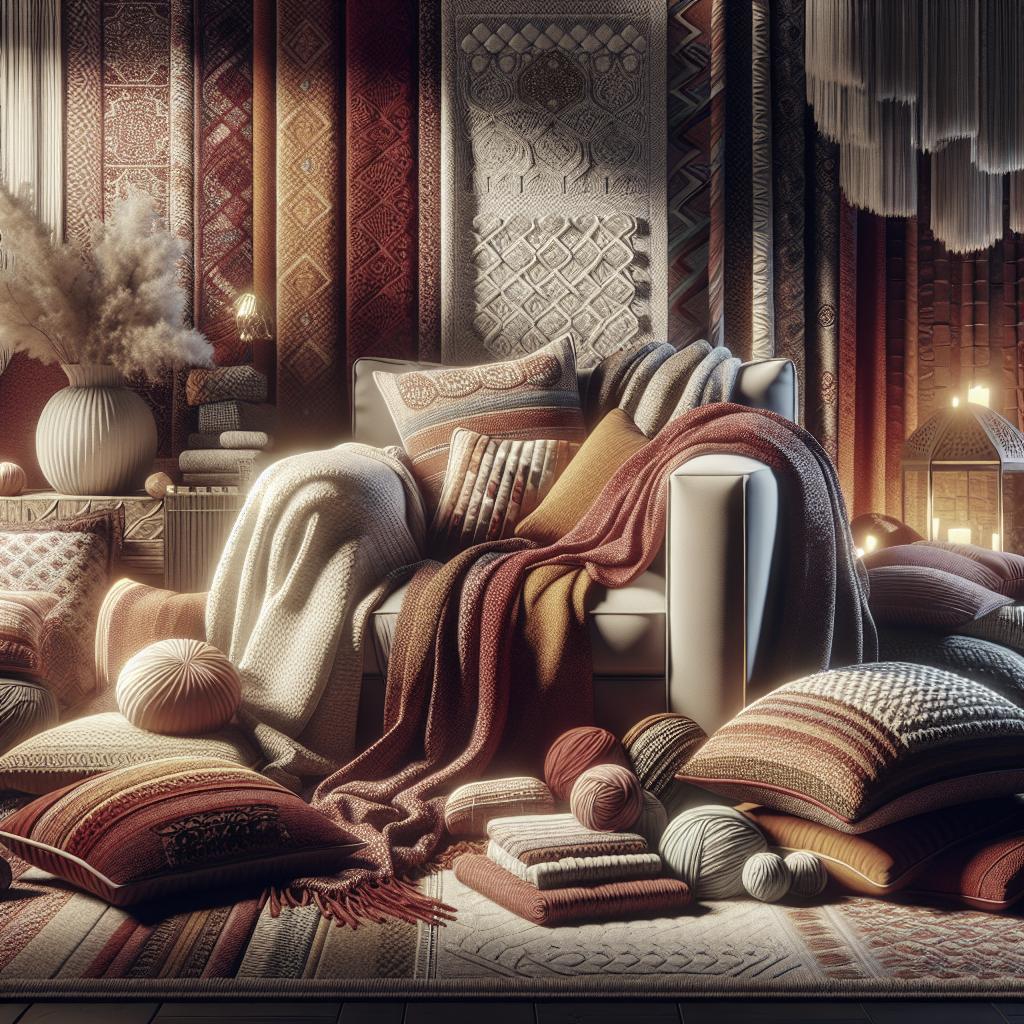
Rugs are more than just floor coverings; they set the tone for the entire space. A plush, high-pile rug underfoot can instantly increase the cozy quotient of any room. Consider layering rugs as an innovative technique to introduce complexity in pattern and texture – perhaps a neutral large rug beneath a more intricately designed smaller rug.
This style not only anchors the room visually but also defines distinct areas within an open-plan living space, creating zones of warmth and comfort that encourage relaxation.
2. Throws: The Versatile Accessory
Throws are the quintessential accessory for achieving warmth. Drape them over sofas, chairs, or even at the end of beds for both a splash of color and added texture. During colder months, opt for heavier fabrics such as knitted wool or fleece to enhance comfort.
In addition to their warmth-providing potential, throws can serve as a stylistic element to express personal taste, offering a budget-friendly means to experiment with seasonal trends without overhauling your entire decor.
3. Cushions: The Flavorful Garnish
Cushions serve as the garnish in any decor setting, adding both comfort and a dash of personal flair. Opt for various shapes, sizes, and materials—mix velvet with linen, sequined with smooth cottons—to create a lively interplay of textures and styles.
These small but impactful additions not only enhance visual interest but also offer practical warmth, providing softness and support when you unwind.
4. Curtains: The Soft Framework
Curtains frame your living space, and their fabric choice can significantly influence a room’s ambiance. Heavy drapery in rich, warm tones not only keeps drafts at bay but provides a sumptuous, enveloping atmosphere full of warmth.
Layering sheer curtains beneath heavier ones allows for versatility, controlling light levels and maintaining privacy while enhancing thermal comfort.
Mix Materials for an Added Layer of Dimension
Combining different materials within a space can add a three-dimensional aspect to your decor. For instance, mixing wool and leather, velvet and wood, can create textural layers that deepen the depth of a room. This approach discourages flat, uniform spaces and encourages exploration.
By contrasting materials, you can highlight their individual characteristics, enhancing the overall aesthetic and suggesting an instinctual warmth that is tactile and visually pleasing.
Explore Unexpected Ways to Incorporate Texture
Thinking beyond traditional uses for textiles opens up innovative ways to incorporate them into your space. For example, consider using fabric wall hangings or textile art for adding depth and texture to walls, injecting warmth without the permanence of paint or wallpaper.
Similarly, experimenting with unconventional fabrics, like burlap or jute, can introduce rustic, earthy notes that challenge the norm and add unique character to any space.
Create a Design Plan Grounded in Purpose
Purposeful design is the backbone of a cohesive, warm living environment. When planning your textile choices, consider the function of each space—what mood you wish to create, what activities the space accommodates—and allow these insights to guide your selections.
Ensuring that each textile element not only complements the aesthetic but also serves a functional role will lead to spaces that are not only beautiful but also comfortable and practical, enriched through their thoughtful design.
The Tactile Experience
Engaging the sense of touch is fundamental to creating a cozy environment. The tactile experience of different textiles can provoke emotions and influence the overall comfort level of a room. Soft, plush textiles like cashmere, mohair, or thick knits invite touch and offer a haptic experience that is deeply satisfying.
By prioritizing textiles that invoke warmth through touch, you can create an environment that feels comforting and luxurious, catering to a deeper sensory interaction within your home.
Caring for Your Textiles
The longevity and appeal of your textiles heavily depend on their care. Regular cleaning not only maintains their appearance but also preserves their integrity and ensures they continue to contribute to a warm, welcoming environment.
Invest in understanding the specific care requirements for each type of fabric—whether they require special cleaning solutions, gentle handling, or air drying. Proper care reflects in the lifespan of these materials, maintaining their softness and vividly retaining colors for prolonged periods.
Bringing it All Together
Textiles are transformative, breathing life, comfort, and warmth into any interior. By understanding the textures, colors, and versatility of different textiles, and applying strategic layering and mixing techniques, you can craft an inviting sanctuary.
Thoughtful application and dedicated care of textiles not only enhance the ambiance of your home but also ensure practical comfort and aesthetic elegance. As you integrate these elements into your decor, remember that textiles are more than mere accessories—they are essential components that embody and communicate the soul of your space.
| Concept | Description |
|---|---|
| Fabric Fundamentals | Understanding textures and color palettes to set a warm tone. |
| Layering Art | Using rugs, throws, cushions, and curtains to layer warmth. |
| Mix Materials | Adding dimension by combining different materials. |
| Unexpected Textures | Incorporating unconventional textiles for aesthetic surprise. |
| Design Plan | Choosing textiles with purposeful intent to match function and style. |
| Tactile Experience | Creating a sensory-rich environment through touch-focused textiles. |
| Textile Care | Essential maintenance practices for durability and continued warmth. |
“`